Why Waste Separation Matters

Not just aesthetic — it’s required.

Waste separation in public and commercial spaces is no longer optional. Latvian, Lithuanian, and Estonian laws mandate the implementation of separate waste collection systems — covering paper, plastics, glass, metals, textiles, bio‑waste, and more — to support recycling, environmental sustainability, and resource recovery.

Investing in professional waste separation solutions ensures your facility meets legal requirements, avoids fines, and operates sustainably, while also improving efficiency and clarity in daily waste handling.

Local trends

 (e.g., Riga): Riga plans to introduce mandatory sorting of paper, plastic, and metal waste from 1 March 2027, reinforcing the need for proper separation systems in urban environments. 

Business Responsibility

Waste management regulations define how waste must be handled, including separate collection and preparation for reuse or recycling. Local governments and authorities conduct compliance checks, meaning proper waste separation systems are mandatory for businesses and institutions. Implementing them protects your organization, simplifies operations, and demonstrates commitment to sustainability.

Regulatory Context in the Baltics

To comply with these legal requirements, here’s the current regulatory landscape:
Latvia: Separate collection of key municipal waste types — paper, plastics, metals, glass, textiles, and bio‑waste — is required by national regulations, and municipalities must organize systems to collect these streams separately, creating clear compliance responsibilities for businesses. 


Lithuania: From 1 January 2024, separate sorting of food and kitchen waste is mandatory for households, offices, retail, hospitality, and public institutions, in line with EU waste framework rules.

Estonia: The Estonian Waste Act requires separate collection of waste to enable preparation for reuse and recycling, with municipalities responsible for organizing systems for paper, packaging materials, and other recyclables.

Why This Matters for Your Facility

Compliance: Avoid fines and meet current and upcoming legal requirements.
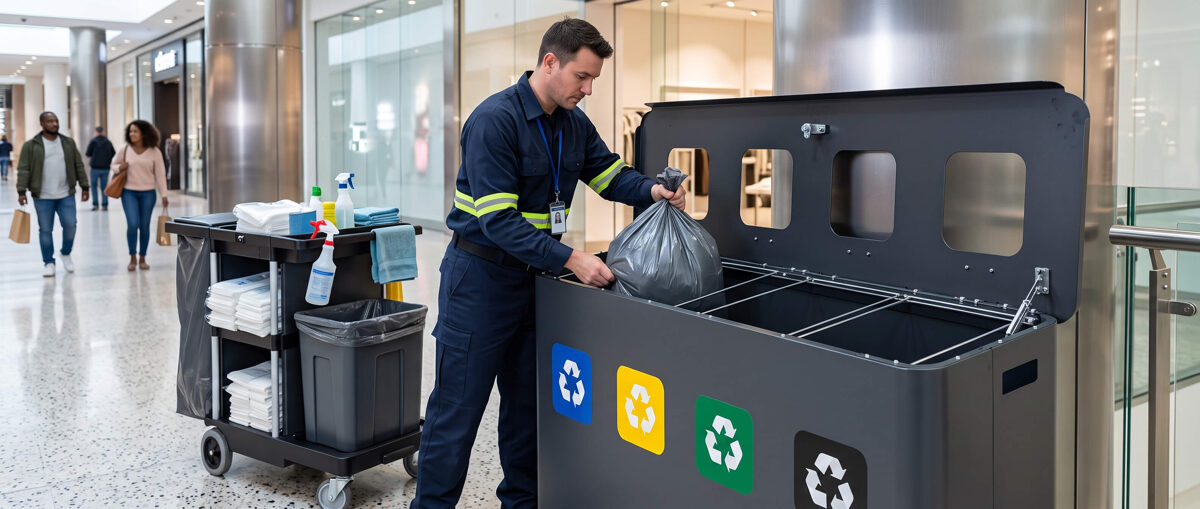
Operational efficiency: Clearly labeled, durable bins simplify daily handling for cleaning and waste staff.
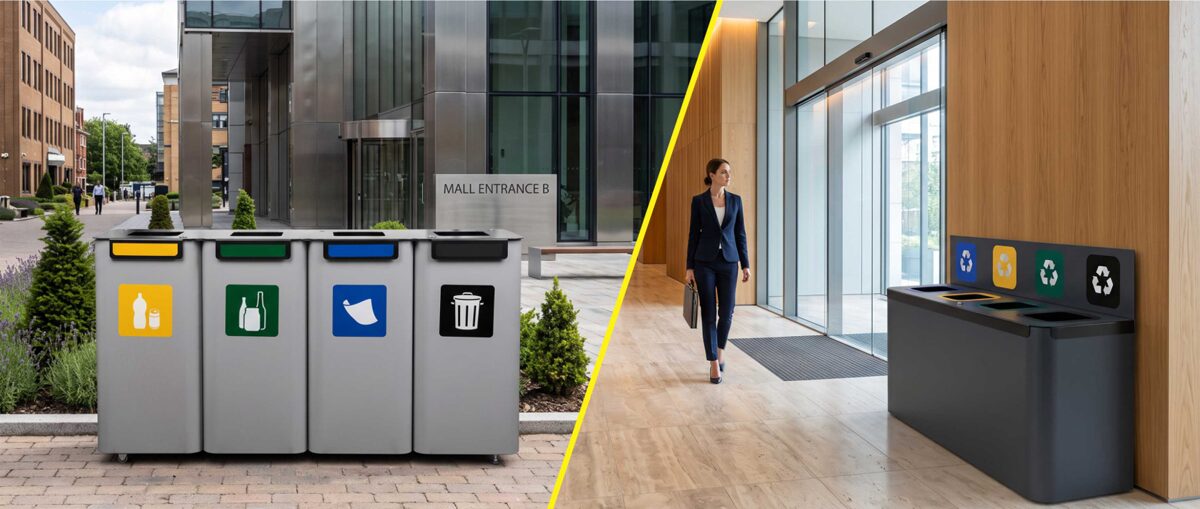
Design integration: Modern, professional systems can fit any facility or architectural concept.
Sustainability: Contribute to recycling goals and corporate environmental responsibility.

Ready to implement?

Investing in the right waste separation systems today ensures your facility is compliant, efficient, and future-ready. Speak with our team to find the solution that fits your public space, business, or institution.